561-532-2139


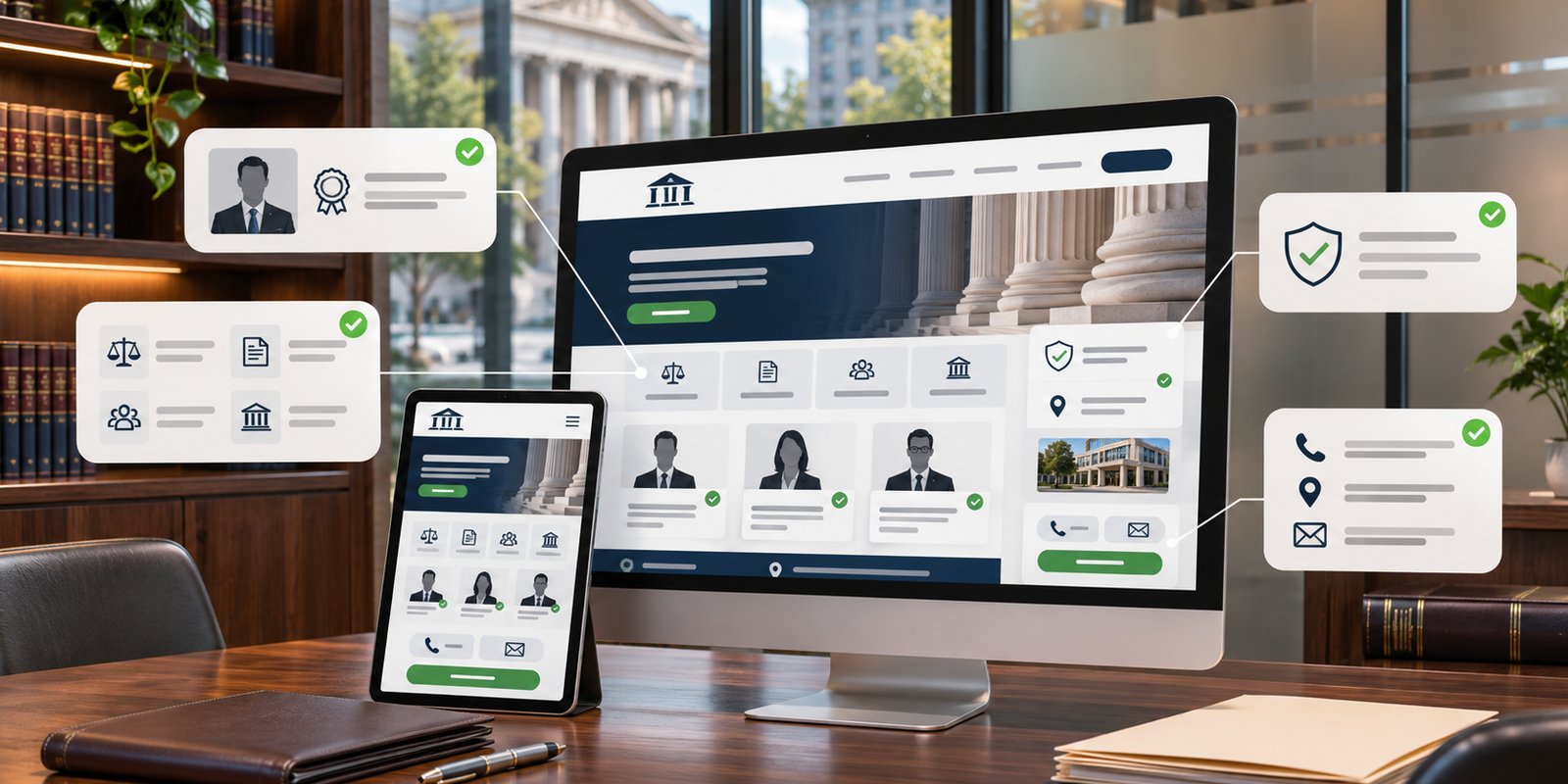

Before contacting an attorney, a prospective client may spend time reviewing the firm's website. They want to understand who handles their type of legal matter, whether the practice has relevant qualifications, and how to contact the office.
A professional appearance can create a positive first impression, but law firm website trust depends on more than attractive colors, photography, or persuasive headlines.
Visitors need accurate information that helps them evaluate the practice. Attorney credentials, clearly explained legal services, genuine professional details, and reliable contact information all contribute to that experience.
For law firms serving West Palm Beach and surrounding Palm Beach County communities, the website should communicate credibility without exaggerated claims or promises about legal outcomes.
Understanding which elements support trust can help attorneys identify practical improvements when reviewing an existing website or planning a new one.
1. Clear Practice Information Establishes Credibility Early
One of the first questions a potential client has is whether a law firm handles their type of legal matter.
A website that makes visitors search through multiple pages to identify its services creates unnecessary uncertainty.
The homepage should introduce the firm, identify its main practice areas, and provide an understandable overview of the legal services available.
For example, a family law practice might explain that it handles divorce, child custody, and related matters. A business law firm may instead introduce contract disputes, business formation, or other services it actually provides.
These descriptions should reflect the firm's work rather than a collection of legal keywords.
Explain Legal Services in Understandable Language
Legal terminology is sometimes necessary, but prospective clients may not understand every technical expression.
A useful website explains services in language that helps visitors recognize the general nature of the work.
Instead of relying entirely on a heading such as "Civil Litigation," the firm can briefly describe the types of disputes involved and the matters its attorneys handle.
This does not mean offering individualized legal advice online.
The purpose is to help visitors determine whether contacting the practice makes sense for their circumstances.
Avoid Claims That Provide Little Useful Information
Statements such as "unmatched representation" or "guaranteed results" offer little practical guidance and may raise concerns under attorney advertising rules.
Specific, accurate descriptions are more useful.
A firm can explain its services, professional background, and approach without implying a guaranteed result.
Clear information gives prospective clients a stronger basis for evaluating the practice than broad promotional language.
2. Attorney Biographies Help Visitors Evaluate Qualifications
Attorney biographies are important law firm website trust signals because they connect the practice with the professionals responsible for providing legal services.
Someone considering representation may want to learn about an attorney's education, licensing, experience, or primary practice areas.
A useful biography makes verified information accessible without requiring visitors to search elsewhere.
Relevant details may include:
- Educational background and legal training.
- Jurisdictions where the attorney is admitted to practice.
- Primary practice areas and professional responsibilities.
- Relevant experience and professional memberships.
- Verified credentials or certifications, where applicable.
- Appropriate professional contact information.
Not every biography needs every category. The information should reflect the attorney's actual qualifications.
Use Authentic Professional Information
Original attorney photographs, accurate names, and current titles help visitors understand who works at the firm.
Generic stock photographs should not be presented as actual members of the legal team.
Likewise, awards, rankings, credentials, and claims of specialization should not appear without verification.
Attorney advertising requirements may also affect how these statements can be presented.
Keep Attorney Profiles Current
An attorney profile can become misleading when someone changes firms, practice areas, or professional status.
Regular reviews help ensure biographies remain accurate.
For multi-attorney practices, profiles should distinguish individual responsibilities so visitors can understand who handles particular legal matters.
These details may seem small, but inaccurate professional information can create unnecessary questions about the firm's reliability.
A credible biography provides relevant facts without overstating qualifications.
3. Genuine Evidence Matters More Than Marketing Promises
Prospective clients may look for information that helps them evaluate a firm's experience and reputation.
Depending on applicable professional conduct rules, a website may include verified professional achievements, approved client testimonials, or descriptions of relevant legal experience.
The important distinction is between useful evidence and unsupported promotion.
A firm may describe the general types of matters its attorneys have handled when the information is accurate and appropriately authorized.
It should not imply that previous outcomes guarantee similar results for future clients.
Review Testimonials and Case Information Carefully
Client testimonials can provide context, but legal services are subject to advertising and confidentiality considerations.
Before publishing feedback, firms should confirm that necessary permissions have been obtained and that the statements comply with applicable rules.
Case descriptions require similar care.
Details that identify clients or reveal confidential information should not be disclosed without proper authorization.
Descriptions of successful outcomes must avoid misleading expectations about future representation.
Make Supporting Information Relevant
A collection of generic badges may be less helpful than information directly related to the visitor's decision.
For example, a prospective business client may benefit from learning that an attorney's practice includes commercial contracts.
Someone researching estate administration may want details about an attorney's relevant background.
Supporting information becomes more useful when it helps readers assess whether the firm's services and qualifications fit their legal needs.
Credibility comes from meaningful evidence rather than promotional volume.
4. Professional Website Design Makes Information Easier to Evaluate
Visual presentation contributes to attorney website credibility because it affects how comfortably people can find and read information.
A website with inconsistent fonts, crowded paragraphs, confusing navigation, or distracting animations can make useful content difficult to follow.
Professional design should organize information around visitor needs.
Prioritize Readability
Legal services often involve detailed explanations. Website design should make those explanations approachable without removing important context.
Readable typography, appropriate spacing, descriptive headings, and consistent formatting help visitors follow the material.
The website's navigation should also make essential sections recognizable, including attorney profiles, firm information, and contact details.
Visitors should not have to interpret unclear menu labels to locate basic information.
Consider Mobile Usability
Prospective clients may research legal representation on a phone before deciding whether to contact an office.
Mobile layouts should preserve readable text, accessible navigation, and functional contact options.
A website that looks polished on a desktop computer can still cause frustration when buttons are difficult to select or content extends beyond the screen.
Wellington Web Designs provides custom website design and development using a mobile-first approach and hand-coded development.
For legal practices, these principles can support a more organized presentation of professional information.
Design does not replace credible legal qualifications, but it can make those qualifications easier to understand and evaluate.
5. Accurate Office Details and Communication Support Transparency
A law firm's website should explain how prospective clients can contact the practice and where its offices are located.
For firms serving West Palm Beach, accurate local information helps visitors determine whether the practice is relevant to their needs.
Useful information includes the firm's name, office address, telephone number, and confirmed office hours or consultation procedures.
If a firm operates multiple locations, each should be identified accurately.
A practice should not claim physical offices in surrounding communities simply to appear relevant to additional geographic searches.
Explain What Happens After an Inquiry
Visitors may hesitate when they do not understand what submitting a contact form will accomplish.
A website can reduce uncertainty by explaining whether a form sends an inquiry, requests a callback, or begins appointment scheduling.
These actions are different.
A consultation request should not be described as a confirmed appointment unless the firm's process actually provides confirmation.
Address Confidentiality Appropriately
Legal inquiries may involve sensitive information.
General contact forms should not encourage visitors to submit extensive confidential details without an appropriate process for handling them.
The website should provide any necessary notices about attorney-client relationships and the limits of information submitted online.
These statements should be reviewed by the firm rather than copied from another legal website.
Transparent communication helps visitors understand the inquiry process without making assumptions about representation.
6. Maintain Website Trust Through Accuracy and Accessibility
Website credibility requires ongoing attention.
Information changes as law firms expand, modify their services, or update their professional teams.
A useful website review should examine both the accuracy and accessibility of important information.
Check for Outdated Details
Common problems include old attorney biographies, incorrect telephone numbers, broken contact links, and service descriptions that no longer reflect the practice.
A firm should review office information, professional credentials, and statements that may require updates.
These issues can create confusion even when the website's visual design remains attractive.
Make Essential Information Accessible
Accessibility supports visitors who use different devices, assistive technologies, or methods of navigating online information.
Clear heading structures, meaningful links, sufficient contrast, and keyboard-accessible navigation are valuable considerations.
Contact forms should also provide understandable labels and instructions.
The objective is to make important information accessible to a wider range of prospective clients.
Evaluate the Website From a Visitor's Perspective
A practical review should consider several questions:
- Can visitors identify the firm's primary legal services?
- Are attorney qualifications accurate and easy to find?
- Does the website clearly explain where the firm operates?
- Can someone navigate the site comfortably on a phone?
- Are contact instructions accurate and understandable?
- Are professional claims supported and appropriately presented?
These questions can reveal issues that may weaken confidence.
The Wellington Web Designs team emphasizes custom design, clear communication, and website performance.
For law firms, these priorities support the presentation of accurate professional information through an organized website experience.
Build a Website That Represents Your Law Firm Clearly
Law firm website trust comes from accurate professional information, understandable legal service descriptions, responsible supporting evidence, and a usable website experience.
A polished design can reinforce those elements, but it cannot substitute for verified credentials or transparent communication.
Attorneys evaluating their websites should begin by identifying what prospective clients need to know before making contact.
Wellington Web Designs works with businesses in Wellington, West Palm Beach, and surrounding Palm Beach County communities on custom website design and development.
For practices reviewing their online presence, our guide to turning website visitors into inquiries offers additional guidance on making contact pathways easier to understand.
If your law firm's website needs clearer content, stronger navigation, or a more professional presentation, our team can discuss your goals.
Schedule a Free Consultation with Wellington Web Designs to discuss your website project.
FREQUENTLY ASKED QUESTIONS
What makes a law firm website trustworthy?
A trustworthy law firm website provides accurate attorney credentials, understandable practice area information, reliable contact details, and clear communication about the firm. Professional design and appropriate supporting evidence can help visitors evaluate the practice.
Should attorney websites include client testimonials?
Testimonials may be appropriate when they comply with applicable attorney advertising and professional conduct rules. Firms should verify their accuracy, obtain necessary permissions, and avoid presenting individual experiences as guarantees of future outcomes.
How often should law firms review their website information?
Law firms should review website information whenever attorneys, services, office details, or relevant professional information change. Periodic reviews can also identify outdated claims, broken links, and accessibility problems.
Why is mobile usability important for law firm website trust?
Mobile usability helps prospective clients access attorney information, understand legal services, and locate contact options on smaller screens. Readable layouts and functional navigation make the website easier to evaluate without unnecessary frustration.